How Smart Kitchen Brands Turn Everyday Friction Into Product Innovation
 Tomas Kauer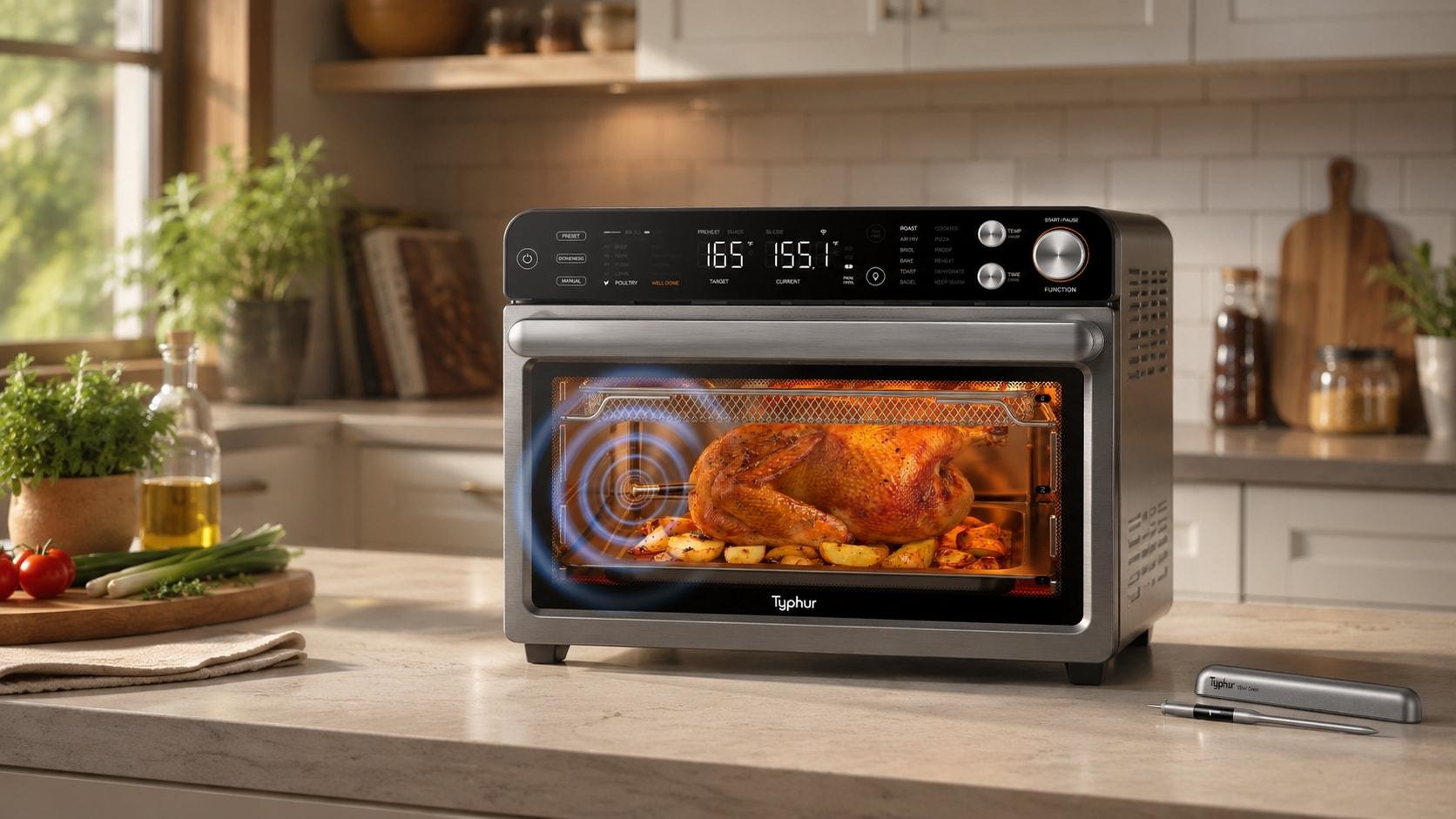
The best product ideas do not always begin with breakthrough technology.
Sometimes they begin with a much smaller observation:
Why does someone keep opening the oven to check dinner? Why does a recipe require repeated shaking and flipping? Why does a customer own a “smart” appliance but still need to stand beside it and guess whether the food is done?
Those moments may seem insignificant, but they are exactly where product opportunities often hide.
In the smart-kitchen category, Typhur provides a useful example of this approach. Instead of treating connectivity, sensors, or AI as innovation by themselves, products such as the Typhur Sync Oven apply technology to familiar cooking problems such as judging doneness and repeatedly monitoring food.
For entrepreneurs in any consumer category, the lesson is broader: innovation becomes more valuable when technology removes friction customers already recognize.
Start With Friction, Not Features
Product teams naturally think in features.
Customers usually do not.
A customer rarely wakes up thinking, “I need an appliance with another sensor.” They think:
“Why does my chicken keep coming out dry?”
“Do I need to check the oven again?”
“Why do I have to keep turning this food?”
“Why is this so annoying to clean?”
Those frustrations are more useful than a list of requested features because they describe an outcome that is not being achieved.
For founders, this changes the starting question.
Instead of asking:
What technology could we add?
Ask:
What recurring task, uncertainty, or inconvenience could we remove?
That distinction can prevent companies from building products that look impressive in a specification table but make little difference in everyday use.
Translate the Complaint Into the Real Job
A customer complaint and a product problem are not always the same thing.
Suppose customers say they want an oven that is “easier to use.”
That is too broad to design against.
Watch the behavior more closely and the actual friction might be that they repeatedly check the internal temperature of meat, estimate doneness from cooking time, open the oven door, and worry about taking dinner out too early or too late.
Now the job becomes clearer:
Help the cook know when the food has reached the desired doneness without requiring constant checking.
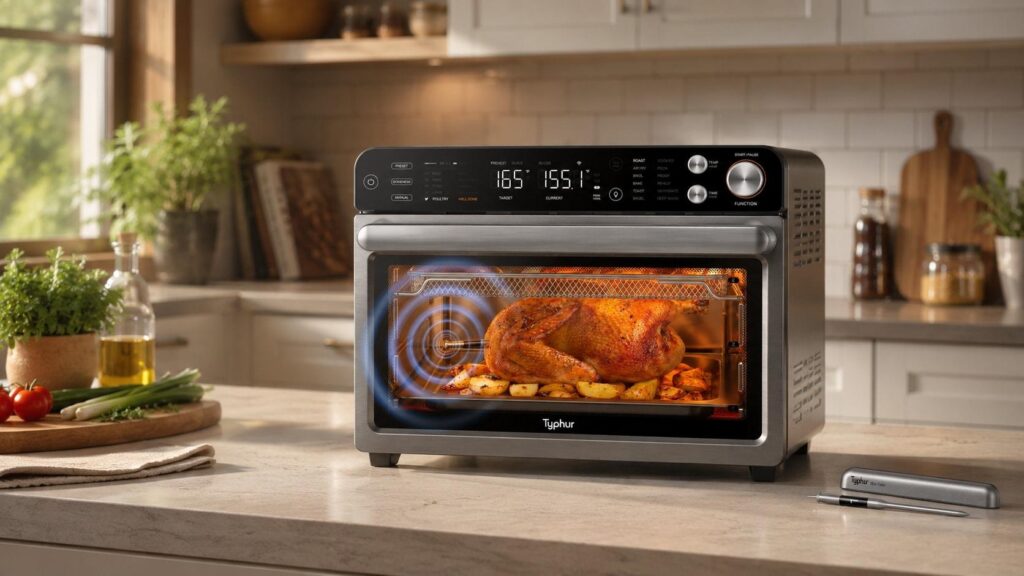
The Sync Oven illustrates this distinction. Its built-in wireless probe monitors the internal temperature of food, and the oven can stop cooking when the selected target doneness is reached. The innovation is not simply “an oven with a thermometer.” The more useful product idea is connecting temperature information to the cooking process itself.
That is an important product-development principle.
Do not stop at collecting information. Ask whether the product can act on that information in a way that reduces work for the customer.
Design Around the Outcome, Not the Component
Once a team identifies a problem, it is easy to become attached to a particular technical solution.
That can narrow innovation too early.
Consider another common cooking frustration: users want crisp, evenly cooked food, but conventional air-fryer workflows may involve shaking, turning, rearranging, or cooking multiple small batches.
There are several ways to approach that problem. A company could increase fan speed, redesign airflow, alter the basket geometry, add heating elements, change control logic, or combine several of those decisions.
Typhur’s Dome platform, for example, uses upper and lower heating elements as part of its approach to cooking from both directions and reducing the need for repeated shaking or flipping in some recipes. It also incorporates a self-cleaning mode aimed at grease buildup in the upper cavity.
From a product-strategy perspective, the interesting point is not the individual component.
It is that one customer problem may require a system-level response.
A better heating element attached to the wrong basket design may not solve the problem. Better software on top of poor hardware may not solve it either.
Strong product innovation often comes from asking:
What combination of hardware, software, industrial design, and workflow produces the outcome the customer actually wants?
“Smart” Should Mean Fewer Decisions
Consumer technology often equates intelligence with more options.
More presets.
More screens.
More notifications.
More data.
But additional information can become another form of friction if customers have to interpret all of it themselves.
The better question is whether intelligence reduces the number of decisions required to reach a desired result.
If a sensor tells someone the internal temperature of a roast, that information is useful.
If the system can use the temperature to help manage cooking toward the selected result, the customer has less to supervise.
The same principle applies outside the kitchen.
A financial app is not necessarily smarter because it shows more charts. A smart thermostat is not better simply because it exposes more controls. A project-management tool is not more useful because it offers another dashboard.
Technology becomes valuable when it turns complexity happening inside the product into simplicity experienced by the customer.
That is a much harder design goal than adding features, but it is also much harder for competitors to copy superficially.
Look for High-Frequency Friction
Not every inconvenience deserves a product.
The most attractive innovation opportunities often combine three characteristics:
Frequency: How often does the problem happen?
Intensity: How frustrating, costly, uncertain, or time-consuming is it?
Reach: How many customers experience it?
A minor irritation that occurs twice a year may not justify a major engineering investment.
A moderate irritation that happens every evening may.
Cooking is full of these high-frequency moments: preheating, monitoring temperature, checking doneness, turning food, cleaning equipment, deciding what to cook, and coordinating several parts of a meal.
Other industries have their own equivalents.
For an e-commerce company, it might be entering the same delivery information repeatedly.
For a software business, it could be moving data manually between two systems.
For a financial product, it might be not knowing how much money is actually available after upcoming bills.
Entrepreneurs should pay particular attention to phrases such as:
“I always have to…”
“I never know whether…”
“Every time I use this…”
“I wish I didn’t have to…”
Those sentences often contain better product briefs than feature-request surveys.
Observe Workarounds
One of the strongest signals of unmet demand is a workaround.
Customers rarely wait patiently for a company to solve every problem. They improvise.
They set multiple timers. They buy an extra thermometer. They create spreadsheets. They use notes on their phones. They combine two products to perform one job. They develop complicated routines and eventually forget how strange those routines would look to a new user.
For a product team, that behavior is valuable.
A workaround tells you three things:
There is a problem.
The problem matters enough for someone to spend effort solving it.
The existing market has not solved it conveniently enough.
Instead of asking customers only what product they want next, ask them to show you how they currently complete the task.
What happens before they use the product?
What interrupts them while they use it?
What do they have to check manually?
What additional tool do they reach for?
What happens immediately afterward?
The most important innovation opportunity may sit outside the part of the journey your existing product currently serves.
Prioritize Friction Before Building
Finding twenty customer frustrations does not mean building twenty features.
Teams need a way to prioritize.
A simple framework is to evaluate each friction point according to:
- How frequently it occurs
- How much effort or uncertainty it creates
- How many users encounter it
- Whether solving it reinforces the brand’s core expertise
- Whether customers value the improvement enough to influence purchase or retention
- Whether the solution can be delivered reliably at a viable cost
This final point matters.
A technically impressive solution that makes the product too expensive, difficult to manufacture, or unreliable is not automatically good innovation.
The objective is not maximum novelty.
It is valuable friction removed at a sustainable cost.
Validate the Problem Before Perfecting the Solution
Founders often become excited about a solution before proving that customers care enough about the problem.
Reverse the order.
Start by validating the friction.
Customer interviews can reveal when and why the problem occurs. Product reviews can show which frustrations appear repeatedly across large groups of users. Customer-service conversations can expose recurring failure points. Social media can show how customers actually use products in their own environments rather than controlled demonstrations.
Then test increasingly realistic solutions.
A prototype does not need every planned feature to answer an important question.
Can customers understand the value?
Does the new workflow reduce the number of steps?
Does it save meaningful time?
Does it reduce uncertainty?
Does it create a different problem somewhere else?
The earlier teams answer these questions, the less expensive it is to change direction.
Make the Innovation Easy to Explain
A surprisingly important test of product innovation happens in marketing.
If a product team needs five paragraphs to explain why a new feature matters, the customer problem may not be clear enough.
Compare these two messages:
“Includes advanced multi-sensor temperature technology.”
and
“Cook to your target doneness instead of relying only on time.”
The first describes technology.
The second describes a problem and an outcome.
Both may be accurate, but only one immediately helps a customer understand why the feature exists.
This is another reason friction-led innovation can be powerful: the original customer problem often becomes the clearest product story.
Product development and marketing no longer need to invent separate narratives.
The problem, product, and promise can follow the same logic.
Do Not Let Innovation Create New Friction
Every new feature has a cost beyond engineering.
It may add another menu.
Another account setup.
Another maintenance step.
Another accessory.
Another failure mode.
Another thing the customer has to learn.
This is especially relevant to smart products.
Connectivity can be useful, but forcing an app into a task that was previously simple can make the experience worse. Automation can save effort, but not if users cannot easily override it when necessary.
For example, the Sync Oven offers app connectivity, but its standard oven functions can also be controlled directly from the appliance.
That design choice illustrates a useful principle for connected-product companies:
Adding a smart layer should not make the basic product harder to use.
Every new feature should therefore be tested against two questions:
What friction does this remove?
What friction does this introduce?
The second question is easy to forget.
Customer Feedback Is Part of Product Development
Innovation does not finish when a product ships.
Real homes, routines, preferences, and edge cases expose things laboratory testing cannot.
That makes post-purchase feedback part of the product-development system.
Reviews, returns, support tickets, community discussions, usage patterns, and direct customer interviews can reveal where the next opportunities exist.
The objective is not to react to every complaint by adding another feature.
Instead, look for patterns.
When unrelated customers repeatedly struggle with the same step, describe the same uncertainty, or create the same workaround, the signal becomes stronger.
Over time, companies that become good at identifying these patterns can build something more valuable than a single successful product.
They build a repeatable innovation process.
The Competitive Advantage Is Understanding Friction Better
Smart-kitchen brands compete on sensors, heating systems, software, industrial design, AI, and increasingly sophisticated automation.
But technology alone rarely creates a lasting advantage.
Competitors can eventually develop similar components.
What is harder to copy is a company’s ability to recognize which everyday frustrations are worth solving—and to turn those observations into products customers immediately understand.
That is the broader lesson for entrepreneurs.
Do not begin innovation meetings by asking what feature can be launched next.
Watch the customer.
Find the repeated pause, the unnecessary check, the workaround, the moment of uncertainty, or the task people have simply accepted as inconvenient.
Then ask a more valuable question:
Why does this friction still exist?
Sometimes the next meaningful product innovation is already happening every day.
Customers are just waiting for someone to notice it.
The post How Smart Kitchen Brands Turn Everyday Friction Into Product Innovation appeared first on Entrepreneurship Life.