
Bank of England staff worked nearly 13,000 days overseas, FOI data shows
 Tomas Kauer
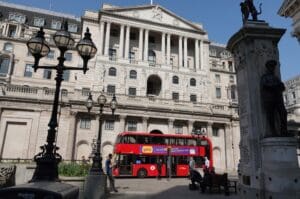
More than 1,000 Bank of England employees spent a combined 12,889 days working outside the UK under the central bank’s working from abroad policy, according to freedom of information data first reported by The Telegraph.
Some 6,000 staff are eligible to work overseas for up to 40 days a year, on top of an entitlement to work from home for three days a week, the Bank’s official guidance states.
The Bank said on Tuesday: “The Bank’s working-from-abroad policy is in place for staff who temporarily work outside the UK. As an organisation with a significant international make-up, we recognise that colleagues may at times need to spend short periods overseas.
“Due to continued investment in modern technology and secure systems, staff are able to carry out their roles effectively while working remotely.
“The policy is subject to time limits and other conditions, including security-related restrictions, and staff are required to fulfil their usual duties and responsibilities professionally and effectively.”
The latest publicly available staff handbook, which sets out the terms alongside the Bank’s other staff codes and policies, states: “The Bank is committed to supporting colleagues working flexibly and allows colleagues to work from abroad for a maximum of 40 working days a year.”
Disclosure lands during rate debate
The figures were released a week after the Bank’s monetary policy committee, which sets Bank Rate, held the cost of borrowing for a fifth time this year.
The nine-strong committee voted by six to three on 29 July to maintain Bank Rate at 3.75 per cent, according to the published minutes. Megan Greene, Catherine L Mann and Huw Pill voted for a rise of 0.25 percentage points, to 4 per cent.
The minutes state that consumer price inflation “has fallen to 2.6 per cent since the previous meeting, although it is expected to rise later this year as the effects of higher energy prices continue to pass through”. The Bank’s target is 2 per cent.
Figures published by the Office for National Statistics in July showed inflation of 2.6 per cent in June, down from 2.8 per cent in May. Grant Fitzner, chief economist at the ONS, said: “A fall in motor fuel prices, particularly diesel, helped ease inflation in June.”
Andrew Bailey, the governor of the Bank of England, said at the time of the decision that the path for rates depended on whether the war between America and Iran continued.
“So it depends on how the events in the Middle East, frankly, unfold. And sadly, we all know this is highly unpredictable. What goes on in the Gulf is not, I’m afraid, under our control,” he said.
Bailey had already indicated that cuts were off the table ahead of the July meeting.
Employers diverge on remote rules
Other large UK employers have tightened office attendance requirements over the same period. Santander instructed its UK office-based staff to work the equivalent of 12 days a month at its sites, replacing a two-day-a-week requirement, in an update sent to 10,000 employees. The bank said in-office presence was important for supporting and developing employees, particularly those early in their careers.
PwC told its 26,000 UK employees they must spend at least three days a week in the office or at client sites, up from two to three days previously.
The Bank’s next Bank Rate decision is due on 17 September, according to its published schedule.